Most traders believe success comes from the perfect strategy. The right indicators. The right entries. The right market. But after some time in the markets, a quiet truth starts to surface: Trading psychology matters more than your strategy ever will. Two traders can use the same setup. One grows steadily. The other blows the account. The difference isn’t knowledge - it’s mindset.
What Is Trading Psychology, Really?
Trading psychology is how you think, feel, and react while trading. It shows up in moments like:
- closing a trade too early out of fear
- holding a losing trade because you “hope”
- increasing size after a win
- chasing losses after a bad day
These aren’t technical problems. They’re human ones. And every trader, beginner or experienced, deals with them.
Why Psychology Breaks More Accounts Than Bad Strategies
Most strategies actually work sometimes. What breaks accounts is:
- overtrading
- revenge trading
- ignoring stops
- taking trades out of boredom
These behaviors usually appear when emotions take control. Fear makes you hesitate. Greed makes you overstay. Ego makes you break rules.
The Real Enemy: Emotional Decision-Making
Markets are uncertain by nature. Your brain, however, craves certainty. When price moves against you, your mind reacts:
- “What if it comes back?”
- “I can’t take another loss.”
- “I’ll just hold a bit longer.”
This is where discipline disappears. Strong trading psychology means acting despite these emotions - not pretending they don’t exist.
Why Beginners Struggle With Trading Psychology
New traders often:
- expect fast results
- tie self-worth to profits
- believe losses mean failure
This creates pressure. And pressure leads to bad decisions. Losses aren’t proof you’re bad - they’re part of the game.
The Psychology of Winning Trades
Winning can be dangerous too. After a few good trades:
- confidence turns into overconfidence
- risk quietly increases
- rules start to loosen
Many accounts are damaged after winning streaks, not losing ones. Good psychology keeps you grounded - even when things are going well.
Best Trading Psychology Tips That Actually Help
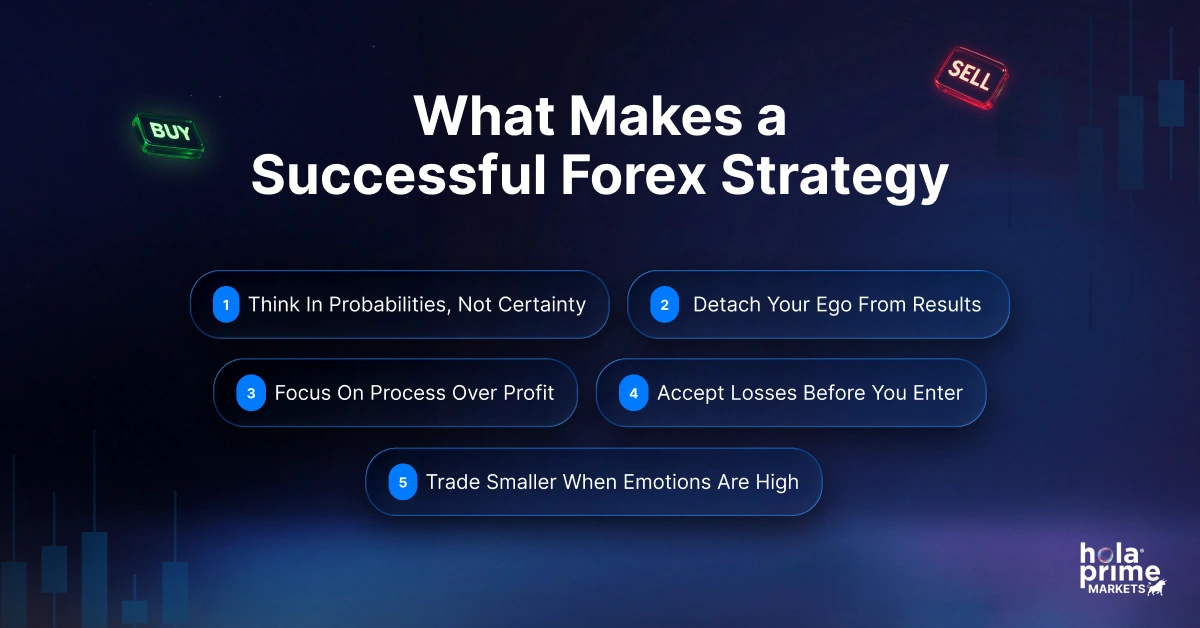
1. Think in Probabilities, Not Certainty
No trade is guaranteed. Your job isn’t to be right - it’s to manage risk when you’re wrong.
2. Detach Your Ego From Results
A losing trade doesn’t mean you failed. It means the probability didn’t play out this time.
3. Focus on Process Over Profit
Did you follow your rules? That matters more than the outcome of a single trade.
4. Accept Losses Before You Enter
If you can’t accept the loss, don’t take the trade. This simple rule saves accounts.
5. Trade Smaller When Emotions Are High
Reducing size reduces pressure. Clear thinking returns when risk feels manageable.
Why Discipline Beats Motivation
Motivation fades. Discipline stays. You won’t always feel like following rules - that’s normal. The best traders act correctly even when they don’t feel like it.
How Strong Trading Psychology Is Built
It’s built through:
- experience
- self-awareness
- journaling mistakes
- accepting uncertainty
Not overnight. Not from a single book. But slowly, trade by trade.
The Quiet Truth About Consistent Traders
Consistent traders aren’t emotionless. They still feel fear. They still feel frustration. The difference is: they don’t let emotions decide their actions.
Final Thoughts
If you’re struggling in trading, it’s probably not your strategy. It’s how you respond:
- after losses
- during drawdowns
- after wins
Work on your mindset as seriously as you work on your charts. Because in the long run, Trading psychology is what decides who survives.