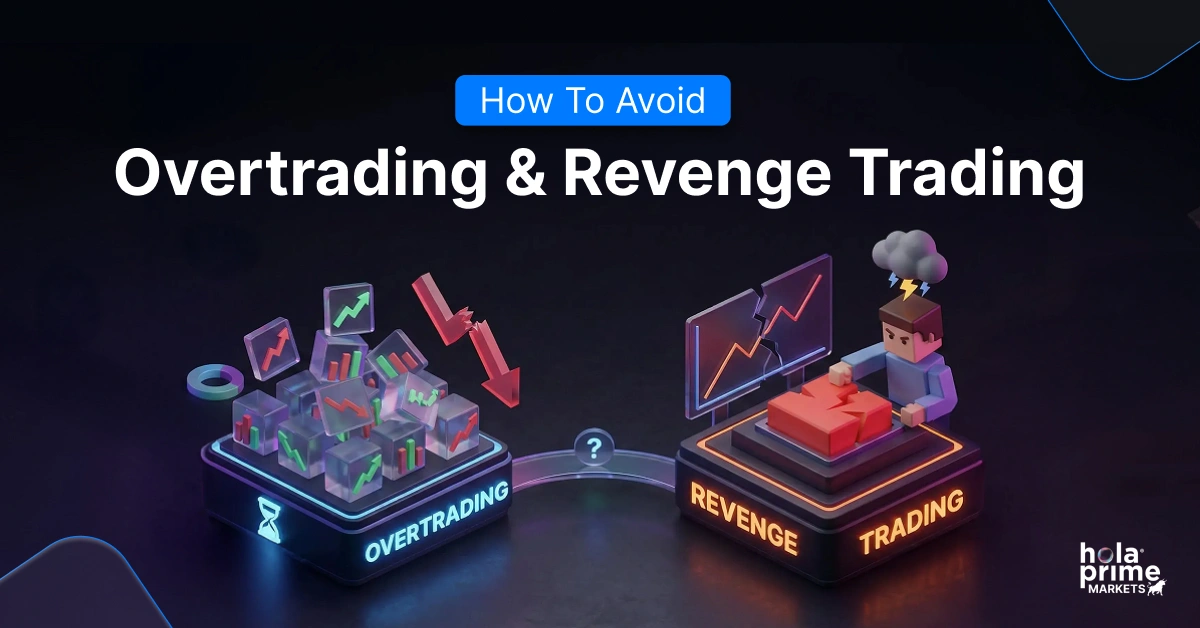
Most traders don’t lose money because they lack knowledge. They lose money because they trade too much or trade for the wrong reasons. Two habits are usually responsible: overtrading and revenge trading. They don’t show up on charts. But they quietly drain accounts.
What Is Overtrading, Really?
Overtrading isn’t just “trading a lot.” It’s trading without a clear reason. It looks like:
- taking low-quality setups
- trading out of boredom
- forcing trades after missing one
- increasing size just to feel active
More trades don’t mean more profits. They often mean more mistakes.
What Is Revenge Trading?
Revenge trading happens after a loss. Instead of pausing, you think:
- “I need to make it back.”
- “That loss wasn’t fair.”
- “Just one good trade will fix this.”
The goal quietly shifts from execution to emotional relief. That’s when damage begins.
Why Overtrading Feels So Tempting
The market is always moving. That creates pressure:
- fear of missing out
- belief that more trades = more chances
- impatience with slow progress
But activity is not productivity. Professional traders often take very few trades.
Why Revenge Trading Is So Dangerous
Revenge trading compounds mistakes. After a loss:
- emotions are high
- objectivity is low
- risk rules are ignored
Losses are normal. Chasing them is not.
How to Avoid Overtrading
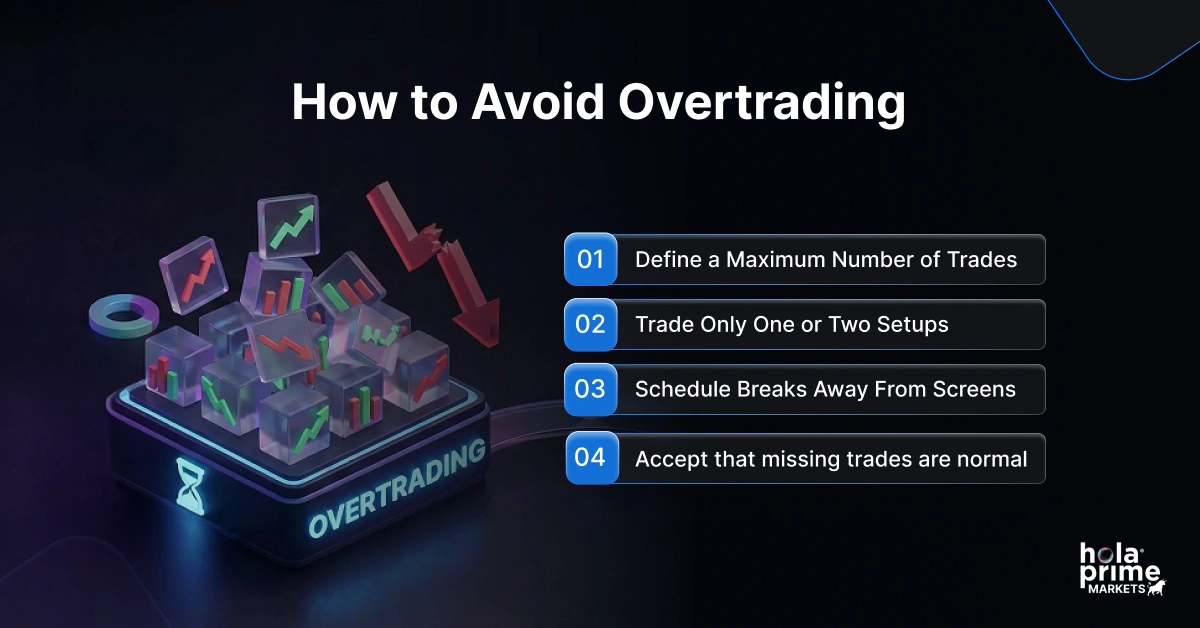 Avoiding overtrading starts before the trading day.
1. Define a Maximum Number of Trades
Set a daily limit. When it’s reached - stop. Limits create discipline when emotions try to take over.
2. Trade Only One or Two Setups
The more setups you watch, the more excuses you find. Fewer rules = clearer decisions.
3. Schedule Breaks Away From Screens
Stepping away reduces impulsive trades. No screen time often equals better trades.
4. Accept that missing trades are normal
You don’t need every move. You need your move. Missed trades are not mistakes.
How to Avoid Revenge Trading
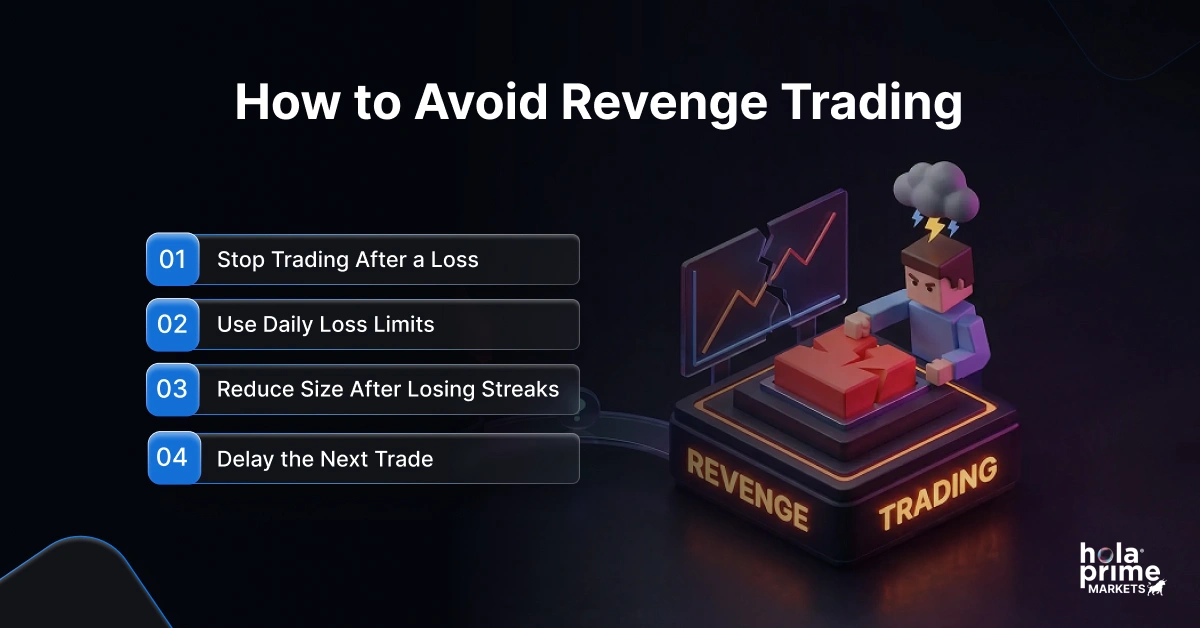 Revenge trading is emotional - so the solution must be behavioral.
1. Stop Trading After a Loss
One loss is manageable. Two emotional losses are not. Take a break after losing trades - especially early ones.
2. Use Daily Loss Limits
When the limit is hit, the day is over. This rule alone saves accounts.
3. Reduce Size After Losing Streaks
Smaller size brings clarity back. Trying to recover quickly increases damage.
4. Delay the Next Trade
Even a 10-minute pause helps emotions settle. Good trades don’t disappear in minutes.
Why Overtrading and Revenge Trading Feel Logical in the Moment
Emotions are convincing. Fear says: “You’re falling behind.” Ego says: “You can fix this.” Discipline says: “Protect the account.” Listening to discipline is a skill built over time.
The Role of Journaling in Breaking These Habits
Write down:
- why you entered
- how you felt
- whether the trade followed your plan
Patterns show up quickly. Awareness leads to control.
The Hidden Cost of Overtrading
It’s not just financial. It causes:
- mental fatigue
- emotional burnout
- loss of confidence
- inconsistent results
Trading should feel focused - not frantic.
Why Fewer Trades Often Lead to Better Results
When trades are limited:
- quality improves
- patience grows
- emotions settle
- execution sharpens
Less noise. More clarity.
Final Thoughts
Overtrading and revenge trading don’t come from bad intentions. They come from human emotions. The solution isn’t willpower. It’s structure:
- clear rules
- firm limits
- intentional breaks
Protect your mindset. Because the fastest way to lose in trading is trying to win back what you just lost.